

Hotel Furniture Trends 2026: Sustainability, Biophilic & Smart Design
Hotel design is changing from simply creating attractive interiors to creating spaces that are more adaptable, sustainable, connected, and human-centered.
For hotel owners, designers, developers, and FF&E procurement teams, furniture is increasingly becoming part of this transformation. A guestroom chair, bedside table, sofa, or lobby seating system is no longer evaluated only by appearance. Buyers are also considering material transparency, lifecycle value, flexibility, technology integration, maintenance, and the experience a piece creates within the space.
Current 2026 hospitality design discussions point toward several interconnected directions: sustainable and circular materials, stronger connections with nature, integrated technology, and modular furniture systems that can adapt to changing operational needs. Gensler's 2026 hospitality outlook similarly highlights wellness, personalization, cultural authenticity, and more meaningful guest experiences as important directions for hotel design. Gensler
This makes hotel furniture trends 2026 less about following a particular visual style and more about designing furniture that performs across the entire lifecycle of a hotel.
For international buyers sourcing from China, this shift also changes how furniture should be specified, developed, manufactured, and delivered.
1. Sustainability Is Moving From a Design Concept to a Procurement Requirement
Sustainability has become one of the most important changes in hospitality furniture specification.
Previously, sustainable furniture might have been treated as an additional design feature. Today, hotel procurement teams increasingly need to understand where materials come from, how products are manufactured, how long they can remain in service, and what happens when individual components need to be replaced.
Recent hospitality research also shows that circular practices are becoming increasingly relevant to hotel operations, including green procurement, material transparency, repair, reuse, and end-of-life considerations. MDPI
What Sustainable Hotel Furniture Looks Like
For furniture manufacturers, sustainability can involve several different decisions:
- FSC-certified or responsibly sourced wood
- Recycled or recyclable materials
- Low-VOC finishes
- Recycled-content textiles
- Durable upholstery
- Repairable components
- Replaceable upholstery panels
- Modular construction
- Reduced packaging
- Material documentation
The important point is that sustainability should not be reduced to one material.
A piece of furniture made from a sustainable material but designed to be difficult to repair may have a very different lifecycle profile from a product whose individual components can be replaced.
This is why lifecycle thinking is becoming increasingly important in hotel furniture trends 2026.
Design for Longer Service Life
For a hotel operator, extending furniture life can have a practical financial impact.
Consider a lounge chair with a replaceable upholstered cover.
If the frame remains structurally sound after several years, replacing the upholstery may be more practical than replacing the entire chair.
The same principle can apply to:
- Headboards
- Sofa modules
- Table tops
- Cabinet fronts
- Drawer hardware
- Lighting components
For project buyers, this means sustainability should be discussed together with durability, maintenance, and replacement strategy.
2. Biophilic Design Is Becoming More Integrated Into Furniture
Biophilic design is another major direction in hospitality interiors.
Rather than simply adding plants to a lobby, designers are increasingly using natural materials, organic forms, textures, colors, and visual connections to nature throughout the guest experience.
Current hospitality design discussions describe a move toward natural wood grains, stone, rattan, bamboo, organic shapes, and tactile materials as part of this broader shift. www.karamspaces.com
From Decoration to Material Language
The difference is subtle but important.
A hotel does not necessarily need to place a large plant next to every piece of furniture to create a biophilic environment.
Instead, the furniture itself can contribute through:
- Natural oak or walnut veneer
- Solid timber details
- Rattan or woven elements
- Stone surfaces
- Warm neutral upholstery
- Rounded silhouettes
- Organic curves
- Natural tactile finishes
This approach allows furniture to become part of the architectural language rather than an isolated decorative object.
Why Biophilic Furniture Works in Hospitality
Hotels are increasingly trying to create environments that feel:
- Calm
- Comfortable
- Authentic
- Local
- Personal
- Less standardized
This is particularly relevant to boutique hotels, resorts, wellness properties, and luxury hospitality projects.
A natural material palette can also help connect a hotel with its geographical location.
For example, a coastal resort may use:
- Teak
- Natural fabrics
- Woven textures
- Stone
- Soft neutral colors
A city hotel may instead interpret biophilic design through:
- Dark wood
- Sculptural greenery
- Natural stone
- Warm lighting
- Organic furniture silhouettes
The trend is therefore not about copying one visual style.
It is about creating a stronger relationship between furniture, material, architecture, and place.
3. Smart Furniture Is Becoming More Invisible
Technology is becoming part of the hotel experience, but the design direction is not necessarily about making technology more visible.
Instead, the trend is toward integrated technology that disappears into the furniture.
Current 2026 FF&E discussions highlight features such as accessible power, USB-C charging, wireless charging, cable routing, lighting controls, and service-access considerations. Hongye Furniture Group Co., Ltd
What Smart Hotel Furniture Can Include
Depending on the project, furniture may integrate:
- USB-C charging
- Wireless charging
- Power outlets
- Reading lights
- LED lighting
- Cable management
- Hidden electrical components
- Control panels
- Sensors
A bedside table, for example, can incorporate:
- Charging
- Lighting
- Storage
- Power access
without looking like an electronic device.
The goal is simple:
Technology should support the guest experience without becoming the visual focus.
Technology Must Be Coordinated Early
This creates an important challenge for hotel projects.
Smart furniture cannot always be treated as a furniture-only issue.
A bedside charging system may involve:
- Furniture manufacturer
- Electrical contractor
- MEP team
- Hotel IT team
- Interior designer
Therefore, the location of:
- Power outlets
- Cable routes
- Transformers
- Access panels
- Switches
should be confirmed before production.
For manufacturers, this means furniture drawings increasingly need to communicate not only dimensions and materials, but also technical interfaces.
4. Modular Furniture Is Changing How Hotel Spaces Are Used
Another important direction in hotel furniture trends 2026 is modularity.
Hotels increasingly need spaces that can serve multiple purposes.
A lobby may operate as:
- Reception area
- Lounge
- Working space
- Social area
- Event space
A guestroom may need to support:
- Sleeping
- Working
- Dining
- Relaxing
This makes flexible furniture particularly useful.
What Is Modular Hotel Furniture?
Modular furniture uses individual components that can be:
- Combined
- Separated
- Rearranged
- Replaced
- Expanded
Examples include:
- Modular sofas
- Sectional seating
- Flexible banquettes
- Modular headboards
- Reconfigurable tables
- Movable lounge furniture
Industry analysis for 2026 increasingly connects modularity with flexible hotel layouts, extended-stay formats, multi-use spaces, and easier future refurbishment. MINGSUN
Why Modularity Matters for Hotel Owners
Imagine a hotel lobby with one large fixed sofa.
If the hotel changes its layout later, the sofa may no longer work.
Now imagine the same seating system consisting of:
- Corner modules
- Armless modules
- Ottoman modules
- Tables
The hotel can rearrange the configuration without replacing the entire system.
This can make future renovation more manageable.
Modularity can also simplify:
- Replacement
- Transportation
- Maintenance
- Reupholstery
- Storage
For hotel developers thinking about long-term asset value, this is an important consideration.
5. Quiet Luxury Is Moving Toward Material and Experience
While sustainability and technology are changing the technical side of furniture, aesthetics are also evolving.
The current hospitality market is moving away from interiors that depend entirely on obvious luxury signals.
Instead, premium spaces increasingly emphasize:
- Proportion
- Texture
- Material quality
- Comfort
- Craftsmanship
- Softness
- Authenticity
This connects with the broader move toward more meaningful and personalized hospitality environments identified in 2026 design forecasts. Gensler
What This Means for Hotel Furniture
A luxury hotel sofa does not necessarily need:
- Excessive decoration
- Highly reflective finishes
- Oversized branding
- Complicated ornamentation
Instead, the feeling of luxury may come from:
- Deep seating
- Refined upholstery
- Precise stitching
- Natural wood
- High-quality leather
- Comfortable proportions
- Carefully controlled colors
This is where furniture manufacturing becomes particularly important.
A simple-looking product can actually require more precision because every proportion and material transition becomes visible.
6. Local Identity Is Becoming Part of Hotel Furniture Design
Global hotel brands often need consistency, but guests increasingly value a sense of place.
This creates an interesting balance:
Brand standards + local identity.
Furniture can help achieve this balance.
Instead of copying traditional local furniture literally, designers can reinterpret regional characteristics through:
- Materials
- Craft techniques
- Colors
- Patterns
- Shapes
- Cultural references
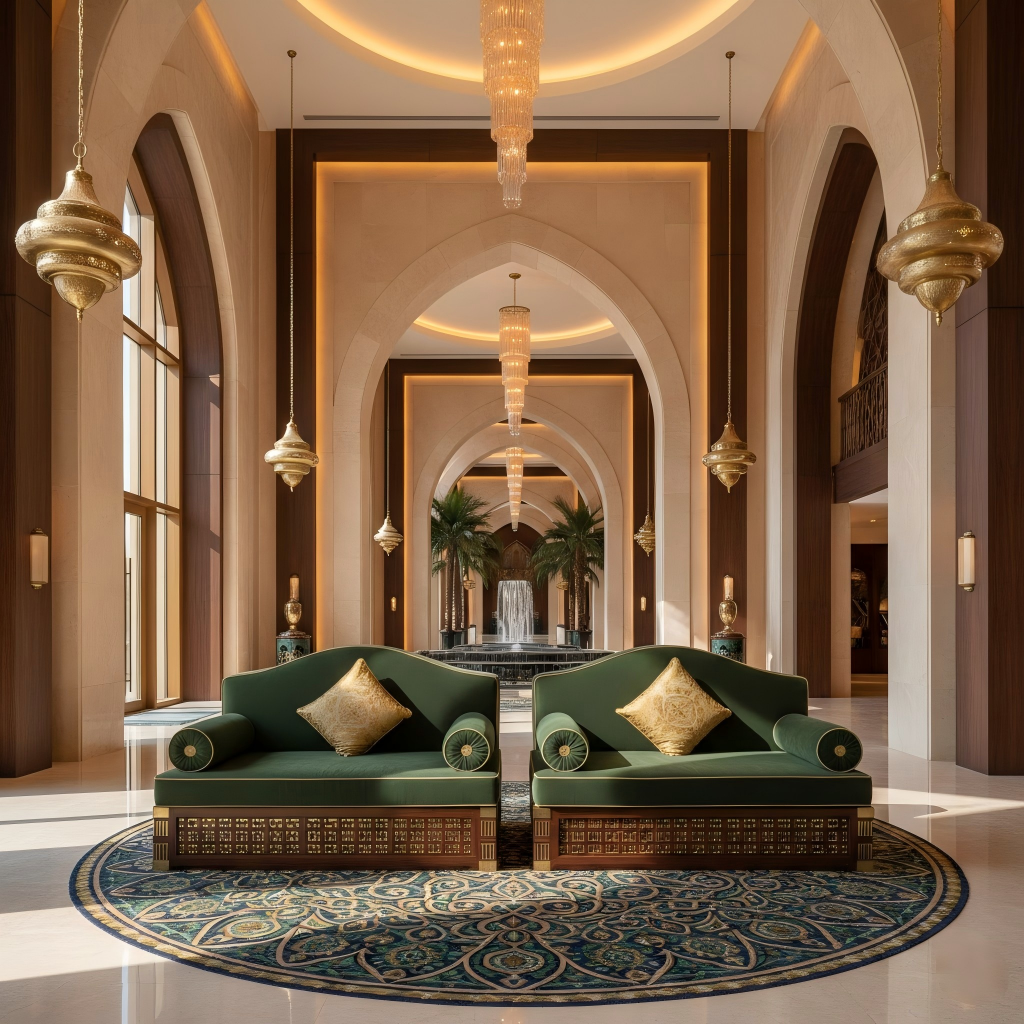
For example, a hotel in the Middle East may incorporate:
- Warm timber
- Stone
- Metal detailing
- Rich textures
while a resort in Southeast Asia may emphasize:
- Teak
- Rattan
- Natural fibers
- Open structures
The furniture becomes a subtle connection between the hotel and its destination.
This is also an area where Foshan furniture manufacturers can offer value because the region combines manufacturing capability with access to a broad network of materials, finishes, upholstery, metalwork, woodwork, and customized production.
7. What These Trends Mean for Furniture Procurement
For hotel buyers, trends should not simply become a list of products to purchase.
They should influence the specification process.
A better approach is to ask four questions for every product:
| Question | What to Evaluate |
|---|---|
| Sustainability | Material origin, emissions, recyclability, lifecycle |
| Function | Comfort, durability, maintenance |
| Technology | Power, charging, lighting, cable management |
| Flexibility | Modular structure, replacement, future adaptation |
This changes the procurement conversation from:
“Does this furniture look good?”
to:
“Will this furniture perform throughout the life of the project?”
8. Why Foshan Matters for the 2026 Hotel Furniture Market
Foshan has developed into one of China's major furniture manufacturing clusters, with manufacturers and supporting suppliers covering a broad range of furniture categories and materials.
For international hotel projects, the value of the Foshan furniture ecosystem is not only the number of factories.
It is the density of the surrounding supply chain.
A project may require:
- Upholstered seating
- Casegoods
- Beds
- Tables
- Metal products
- Stone components
- Outdoor furniture
- Decorative furniture
These categories often require different manufacturing capabilities.
A mature furniture cluster makes it easier to coordinate these requirements.
For a manufacturer such as CC Furniture, this ecosystem supports an integrated approach covering design development, material selection, production, QC, packing, and international delivery.
How CC Furniture Responds to These Trends
At CC Furniture, we see these trends not as isolated design ideas, but as changes in how hotel furniture projects are developed.
Our approach combines:
Design + Manufacturing + Project Execution + International Delivery
This allows a project to move from:
Concept → Drawing → Material → Mock-up → Production → QC → Packing → Delivery
For international clients, this is particularly important because a trend only creates value when it can actually be manufactured consistently at project scale.
A beautiful concept is only the beginning.
The real test is whether the product can maintain:
- Design consistency
- Material consistency
- Structural quality
- Production accuracy
- Packaging quality
- Delivery reliability
This is where the experience of a Foshan furniture manufacturing ecosystem becomes particularly valuable.
With more than 30 years of furniture manufacturing experience in Foshan, CC Furniture works across residential, villa, hospitality, and commercial projects, providing customized furniture solutions from development through delivery.
What Should Hotel Buyers Specify in 2026?
Based on the current direction of the market, hotel buyers can consider including the following in their furniture specifications:
Materials
- Responsible wood options
- Recycled materials
- Low-VOC finishes
- Durable upholstery
- Material documentation
Function
- Contract-grade construction
- Easy maintenance
- Replaceable components
- Comfortable ergonomics
Technology
- USB-C
- Wireless charging
- Integrated lighting
- Cable management
Flexibility
- Modular systems
- Replaceable components
- Reconfigurable seating
- Adaptable layouts
Design
- Natural textures
- Organic forms
- Local references
- Warm neutral palettes
- Refined material combinations
These specifications can help transform hotel furniture trends 2026 from visual inspiration into practical project requirements.
Conclusion
The most important change in hotel furniture trends 2026 is that furniture is becoming increasingly connected to the entire hotel lifecycle.
Sustainability influences material selection.
Biophilic design influences form and texture.
Smart technology influences technical coordination.
Modular design influences future flexibility.
And quiet luxury influences how designers approach materials, proportions, and comfort.
For hotel owners, developers, designers, and procurement teams, the opportunity is not simply to follow every new trend.
Instead, the goal is to identify which trends create genuine value for the property and translate them into clear furniture specifications.
For international projects, working with an experienced manufacturing partner can help bridge the gap between design intent and production reality.
From the furniture cluster in Foshan to hotel projects around the world, the next generation of hospitality furniture will increasingly be defined by one principle:
Better design is not only about how furniture looks today, but how well it performs tomorrow.
FAQ
What are the biggest hotel furniture trends in 2026?
The major directions include sustainable materials, biophilic design, integrated technology, modular furniture, wellness-oriented environments, and more refined material-focused aesthetics.
Is sustainable furniture more expensive?
Not necessarily. The cost depends on material selection, construction, certifications, manufacturing requirements, and project volume. Buyers should evaluate lifecycle value rather than only the initial purchase price.
What is biophilic hotel furniture?
Biophilic furniture incorporates natural materials, organic shapes, textures, colors, and other design elements that create a stronger visual and sensory connection with nature.
What is modular hotel furniture?
Modular furniture consists of components that can be combined, separated, rearranged, or replaced. It is particularly useful for flexible hotel guestrooms, lounges, lobbies, and multi-use spaces.
Can smart technology be integrated into hotel furniture?
Yes. Depending on the design, furniture can integrate charging ports, wireless charging, lighting, power outlets, cable management, and other technical features.
Why source hotel furniture from Foshan?
The Foshan furniture manufacturing cluster provides access to a broad ecosystem of furniture manufacturers, material suppliers, production capabilities, and supporting services, making it suitable for customized hospitality projects.
CTA
Planning a Hotel Furniture Project for 2026?
Have a floor plan, BOQ, design drawings, or furniture schedule?
Send your project requirements to CC Furniture.
Our team can help review the design, materials, specifications, customization requirements, and production scope — from the first sample to final delivery.
Explore custom hotel furniture solutions with CC Furniture →


اترك تعليقًا
Trang web này được bảo vệ bằng hCaptcha. Ngoài ra, cũng áp dụng Chính sách quyền riêng tư và Điều khoản dịch vụ của hCaptcha.